Whites
Hairstreaks
Blues and Coppers
Admirals
Vannesids
Fritillaries
Browns
First records Farnborough 1946 then Cudham 1953
Recent Emergence
| Year | First | Site |
| 1976 | ||
| 1977 | ||
| 1978 | ||
| 1979 | ||
| 1980 | ||
| 1981 | ||
| 1982 | ||
| 1983 | ||
| 1984 | ||
| 1985 | ||
| 1986 | ||
| 1987 | ||
| 1988 | ||
| 1989 | ||
| 1990 | ||
| 1991 | ||
| 1992 | ||
| 1993 | ||
| 1994 | ||
| 1995 | ||
| 1996 | ||
| 1997 | ||
| 1998 | ||
| 1999 | ||
| 2000 | ||
| 2001 | ||
| 2002 | ||
| 2003 | ||
| 2004 | ||
| 2005 | ||
| 2006 | ||
| 2007 | ||
| 2008 | ||
| 2009 | ||
| 2010 | ||
| 2011 | ||
| 2012 | ||
| 2013 | 3 Aug* (trial breed) | Norman Pk |
| 2014 | ||
| 2015 | ||
| 2016 | ||
| 2017 | ||
| 2018 | ||
| 2019 | 31 Aug | Keston |
| 2020 | ||
| 2021 | Jul/Aug* | Elmfield* |
| 2022 | Jul 22 | Elmfield |
| 2023 | 9 Aug BC | |
| 2024 | 9 Aug BC | 15 Nov egg |
| 2025 | 4July/Aug 30th | BC/Joy/Fack/ |
Aerial maps covered by this survey
Butterfly Survey 1976-2025
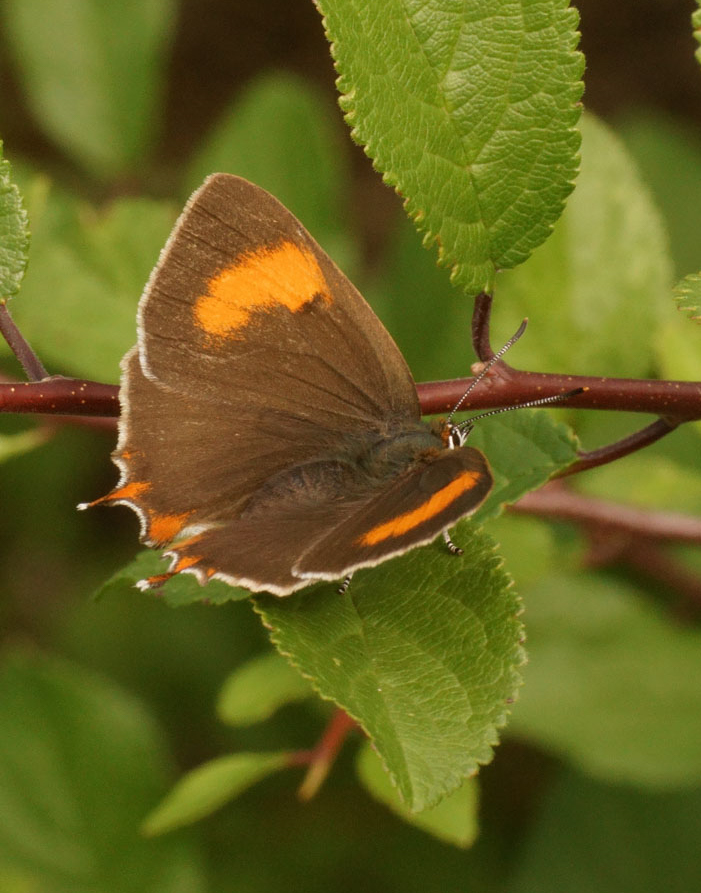
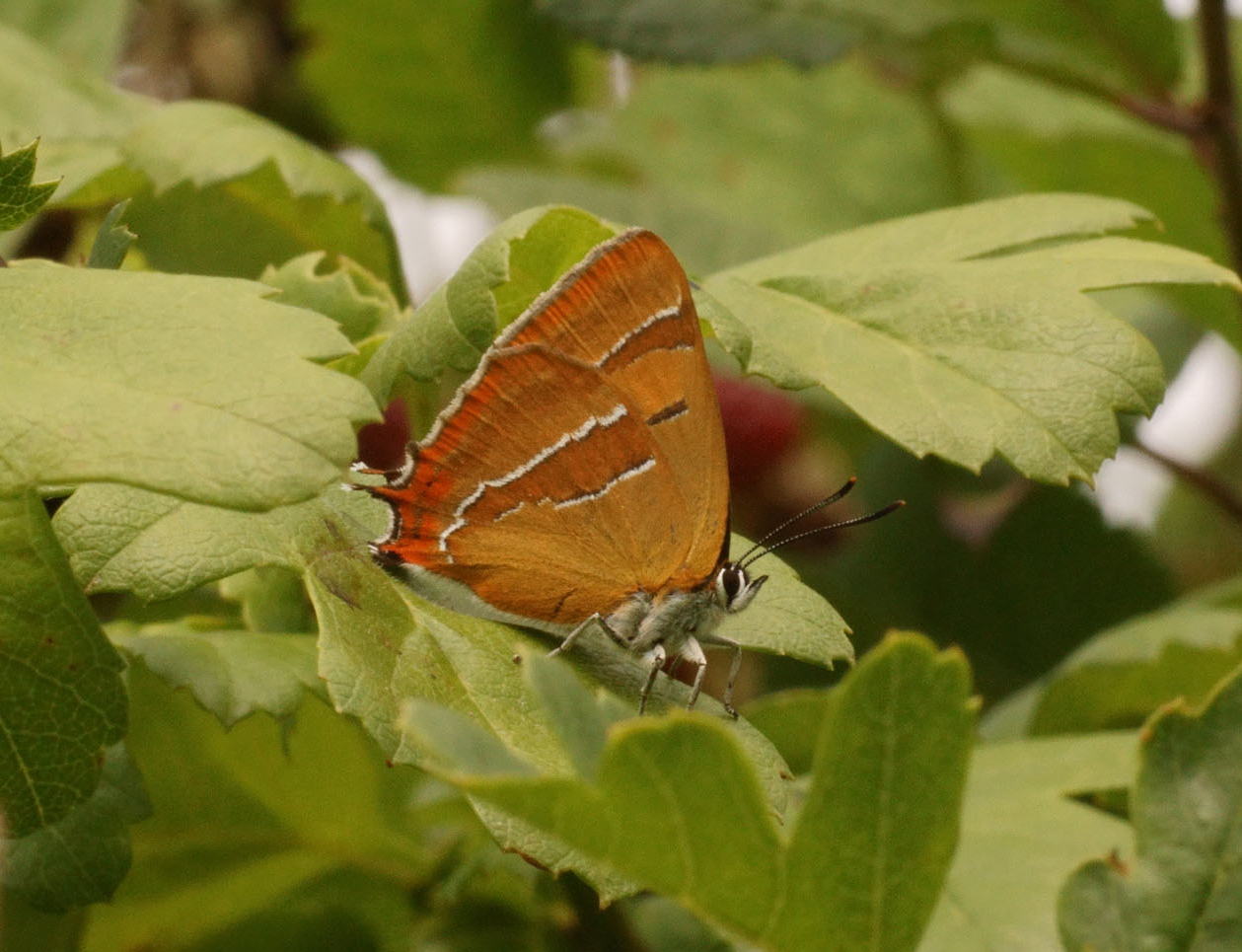
Brown Hairstreak

![]()

Wingspan - 35 -38 mm
The arrival of the highly regarded and rare Brown Hairstreak butterfly within the study area — and increasingly beyond it since 2018/19 — is not without precedent. A confined breeding programme in 2013 demonstrated the area’s potential and echoed much earlier records documented by Chalmers Hunt in Butterflies and Moths of Kent (1962). Hunt recorded small colonies breeding on sloe in and around the Bromley–Farnborough area as early as 1946. Perhaps even more relevant to the pattern now emerging, Hunt also noted the species around Cudham in 1953, suggesting a broader historical footprint in West Kent. This stands in contrast to Eric Philp with his limited resources (Butterflies of Kent, 1993), who recorded the Brown Hairstreak as absent from Kent altogether after 1971. Against this background, its rediscovery in nearby Keston is both a cause for celebration and an opportunity for analysis, particularly in understanding the reasons behind its prolonged absence and now phenomenal spread along the extant corridors, like Keston and Hayes Farm. From 2019 to 2025, eggs have been recorded across the whole of Elmfield, where there is a notably high density of Blackthorn (Prunus spinosa). Eggs have also been found more widely, both locally and beyond Elmfield, wherever Blackthorn occurs within the Bromley area, indicating an expanding and increasingly well-established population, now extending far beyond this immediate locale. .
Habit: Male and female butterflies differ through a marked increase in the patches of scent scales the female displays on its upperwing, from the underside however a very similar set of patterns appear. The butterfly is on the wing long term from late July onwards and appears fleetingly, feeding on aphid honeydew around the breeding site, which in the area surveyed, is on both the extensive and less intensive blackthorn or sloe bushes that have taken over as the hardiest among many of our field and roadside hedgerows.
Single brooded: over winters in egg form - laid strategically on sloe twigs, before the small greenish, louse like larvae emerges in April to feed among the fresh foliage. Pupation is after about ten to twelve weeks, the larvae fattening and darkening through several instars, then descending to the foot of the bush, the butterfly emerging quite late in the year - July./Aug/Sep
Larval Foodplant: locally, sloe - blackthorn (spinosa)
Status locally : Spreading north from contiguous populations via established habitat corridors, including Leaves Green, Keston and Hayes Farm. This expansion appears to have been assisted by climate change and a local decline in avian predators during 2021–2022. The discovery of hundreds of eggs in 2018 by Fred O’Hare and associates along Blackness Lane indicates that the species was already well established and set on rapidly colonising Bromley and surrounding areas. An egg search at Elmfield by the Idverde team in early 2022 found Brown Hairstreak eggs to be widespread across all areas where Blackthorn (Prunus spinosa) occurs, reflecting the legacy of coppice planting undertaken some thirty years earlier. The 2023 season showed a marked increase, with egg counts exceeding 200 and distributed widely across the site. Although there was a slight decline in 2024, cursory searches and post-summer observations in 2025 suggest that egg numbers will exceed those recorded in both 2023 and 2024. My conjecture is that changes in local passerine populations, driven by agricultural practices and other insidious pressures, may have coincided with an expansion of the food plant, P. spinosa. This spread may itself be linked to increased atmospheric nitrogen levels associated with human energy use. A possible parallel can be drawn with the 1980s decline of the Wall Brown butterfly, which retreated from traditional breeding areas affected by high aerosol concentrations to waterside habitats where its food plants could tolerate altered atmospheric conditions. It is also plausible that the introduction of ULEZ has contributed to a cleaner urban environment, benefiting London’s flora and fauna more broadly.
KES - Keston, BC - Bromley Common, BR - Greater Bromley (Whitehall, Bickley, Hayes, Petts Wood, etc., Joy -Joydens Wood, Fack - Fackenden Bank (White Hill Shoreham)
© 2018/19 Fred O'Hare, © Jeff Boswell (images)
© Rodney Compton