Submit Your Records & Comments Here
Aerial Maps of butterfly survey
Large White Pieris brassica
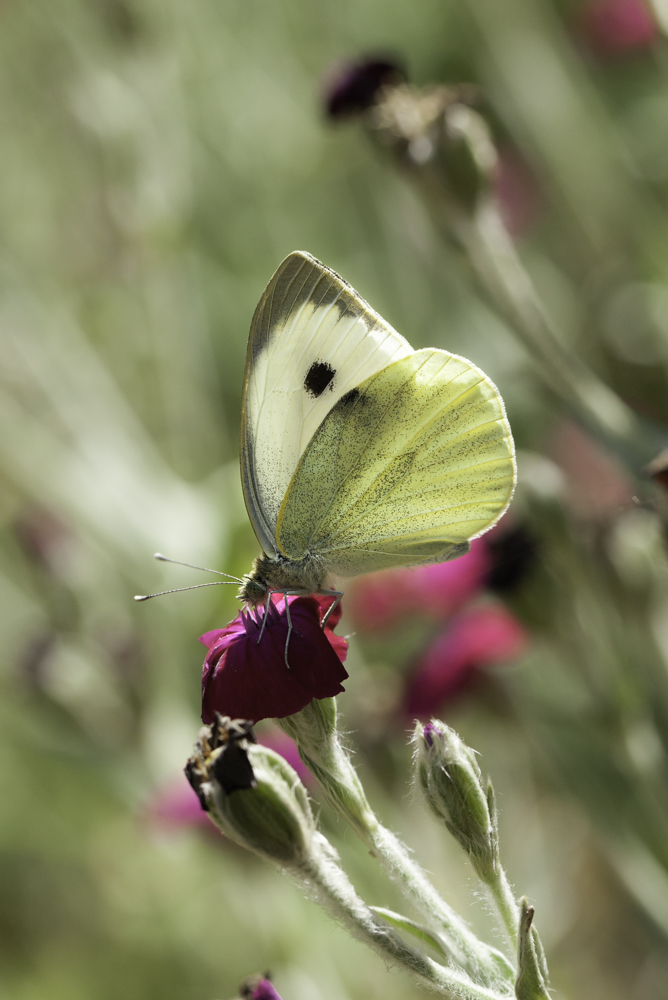
The cabbage white, as it is sometimes known is a misnomer, since the indigenous small white butterfly is more often seen around allottments, whereas the large white, though a common butterfly, is actually a migrant from the near continent, arriving coincident to sunshine and easterly winds.
The large butterfly is common in the study area and can be seen almost everywhere. The smaller male butterfly can be confused with the female small white and female brimstone, though closer inspection will reveal the difference in markings.
Habit: the floppy flight of the female is easy to spot and it will settle with folded or outspread wings - the strong eyespots tempting birds away from the vulnerable body.
Seen to fly in parks, gardens, allotments, rough pastures and suitably uncultivated road and railway embankments.
Breeding: double or even triple brooded: overwinters as a very distinct pale spotted pupa, which can be found harnessed on walls and fences in suitably sheltered places.
Larval Foodplant: Crucifers (cabbage, brussels) and nasturtiums also wild mignonette.
Status: not under threat in our area - numbers fluctuating year by year.
WH - White Hill Shoreham, BC - Bromley Common, Ha Hayes --BN Bromley North - Ey Eynsford - Orp Orpington